

Industrial heat exchangers for chemical plants
Heat exchangers are devices used in industrial plants to transfer heat from one fluid to another.
“When a body is placed in contact with another relatively colder body, a transformation takes place that leads to a state of equilibrium in which the temperatures of the two bodies are equal”
These machines exploit the first law of thermodynamics to cool or heat processes, environments, substances.
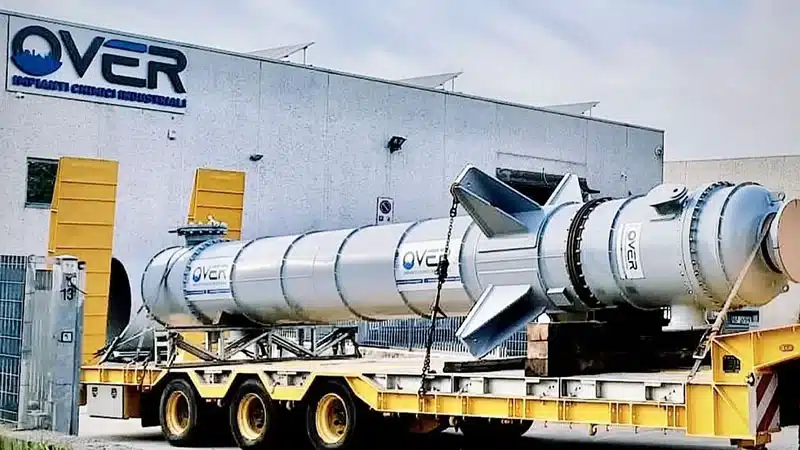
Over’s technical team is ready to create the most suitable heat exchanger for your industrial process, whatever the target sector. We guide you in the choice of the most suitable model: tube bundle, plate, tube and shell depending on the fluids involved (water-air/air-air), the functions to be performed, and the type of plant already existing.
Contact us to request our services or to show us your projects.
What you should know about heat exchange systems
How do they work?
Heat exchangers operate according to the first law of thermodynamics, which states that the total energy of an isolated system remains constant.
Find out more
These machines transfer heat between two fluids at different temperatures without direct contact. In the conditions generated by the machine, the hot fluid transfers heat to the cold fluid, creating a perfect thermal equilibrium between the two temperatures.
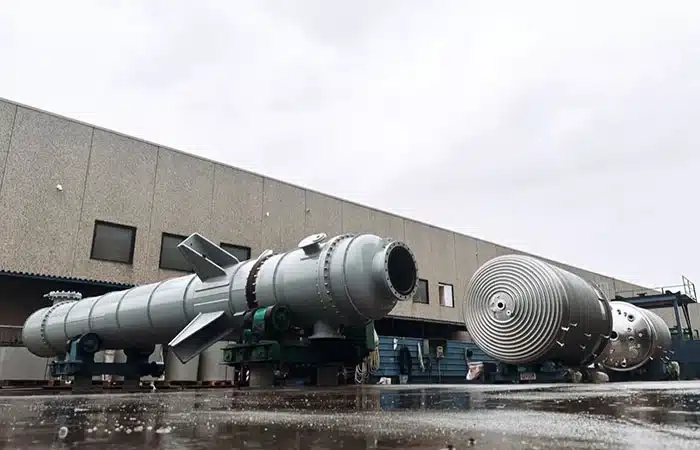
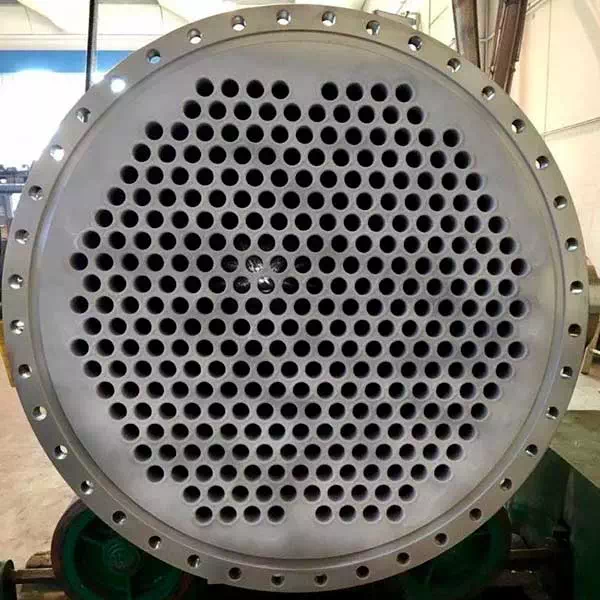
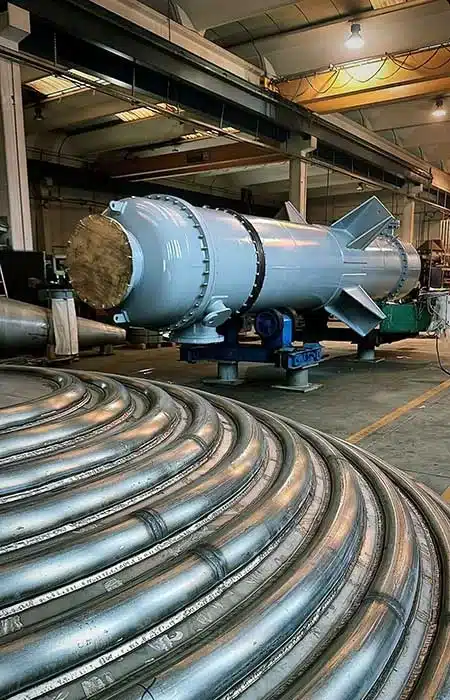
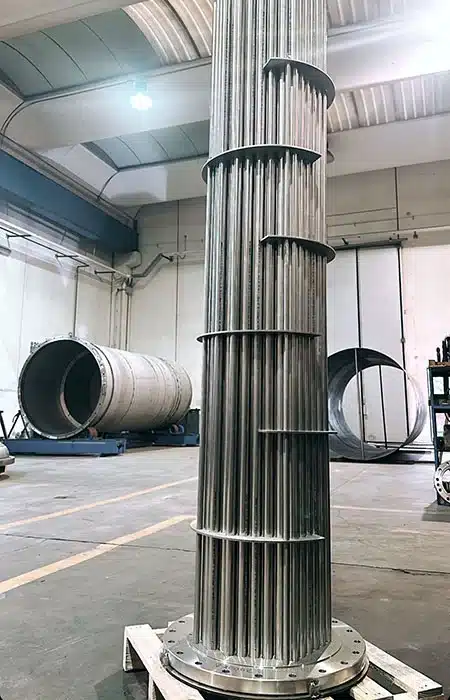
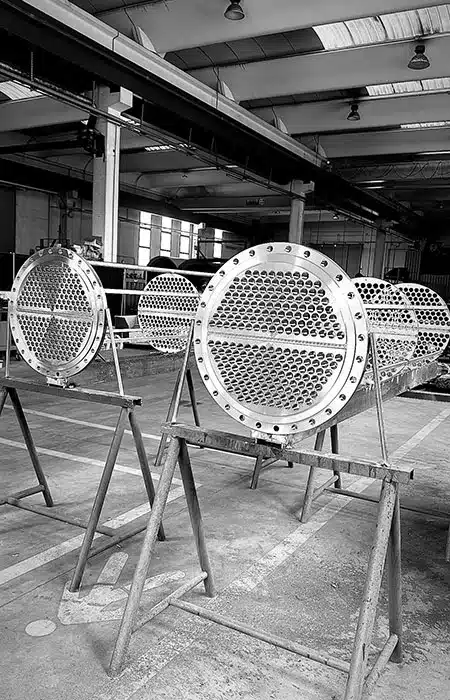
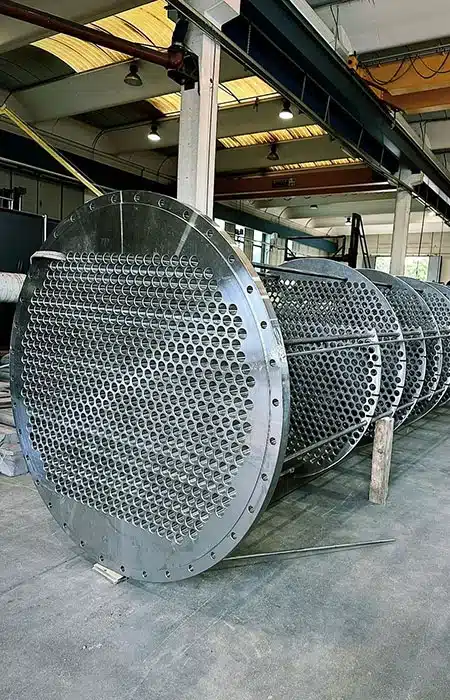
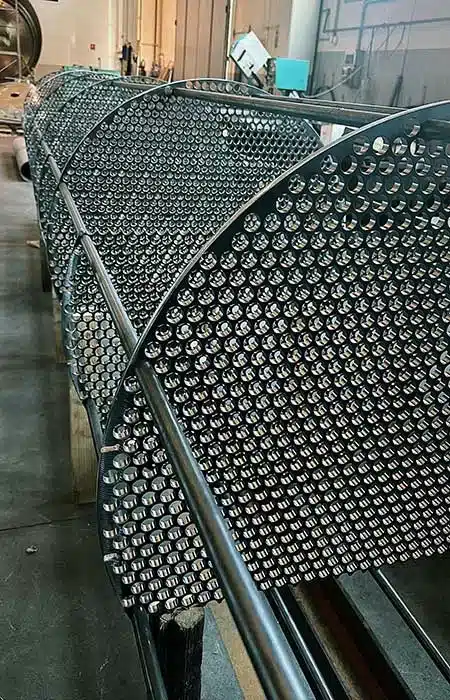
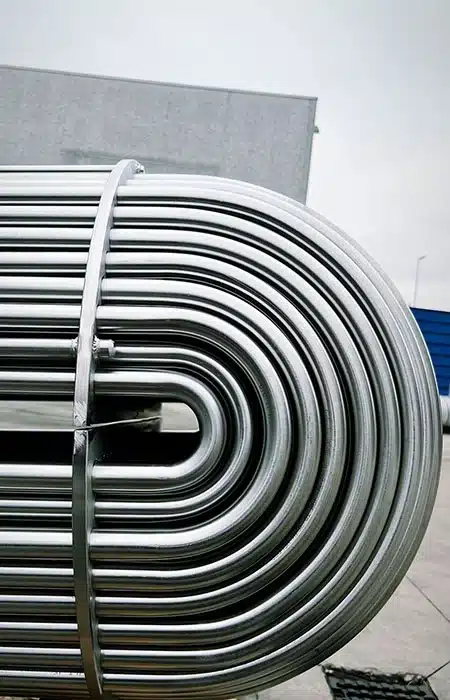
Theoretically, the functioning of the heat exchanger is very simple: pressurised gases or liquids are circulated within a very large bundle of tubes collected in a shell and designed to offer the largest possible surface area to the surrounding environment. The heat generated by the circulating gas/liquid is transferred in large quantities and at high speeds to the surrounding environment and to the fluids in it.
Applications
Heat exchangers are widely used in various sectors to facilitate heat exchange between two fluids at different temperatures.
Find out more
- Chemical and petrochemical industry > they are used for cooling and heating chemical processes.
- Industrial plants > they are used for cooling process fluids and machinery to improve their operating conditions.
- Industrial refrigeration
- Water treatment
Configurations and models
Each heat exchanger is designed to meet specific needs in terms of handling fluids, pressures and temperatures in processes. However, there are different configurations and types:
Models
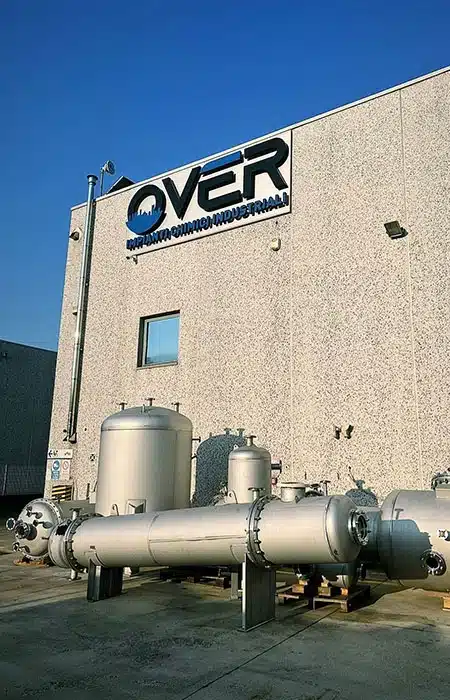
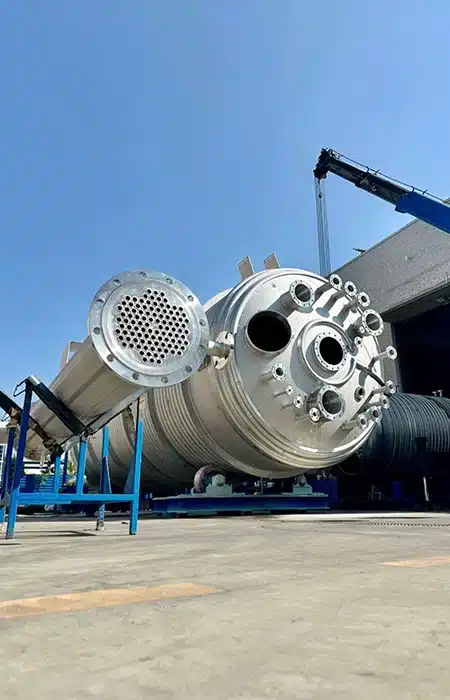
Tube and shell exchangers: these consist of tubes surrounded by an outer shell and are ideal for processes requiring high pressure and high temperatures.
Plate heat exchangers: these consist of stacked thin plates, offer high efficiency in compact spaces, are suitable for viscous fluids and are sensitive to thermal break.
Tube bundle heat exchangers: these consist of tubes aligned in a bundle, are suitable for high-viscosity fluids and industrial and industrial processes.
Welded plate heat exchangers: these use welded plates to reduce heat loss, are ideal for hygienic applications and in food industries.
Finned coils: these consist of tubes surrounded by fins, increase the heat exchange surface area and are commonly used in cooling systems.
Services
- Customised design adapted to specific needs.
- Development of the plant or individual machine based on the drawings supplied or on a previous design.
- Assembly and installation of the heat exchange plant.
- Specialised technical consulting and training for operating personnel.
- Maintenance and repair of heat exchangers.
- Revamping and regeneration of pre-existing systems.
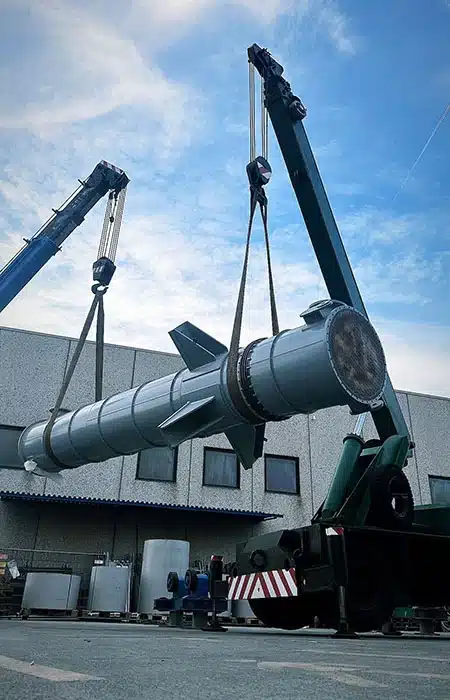
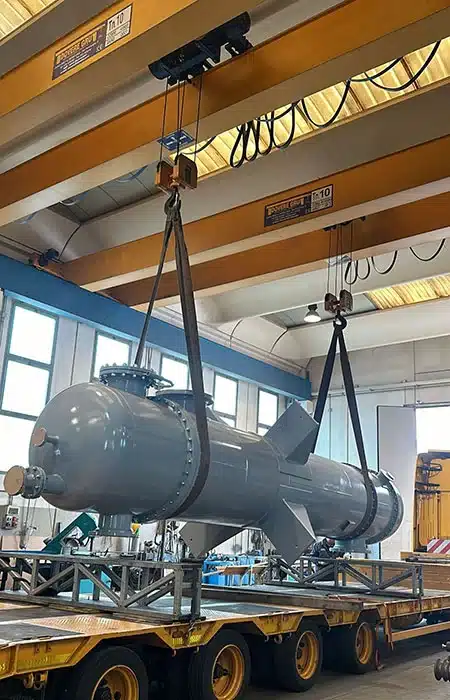
What benefits can an Over heat exchanger have for you?
Besides ensuring plant and workplace safety, our heat exchangers can help reduce operating costs by optimising energy consumption.
The possibility of customising the machine is another key advantage. You will receive a tailor-made system that fits perfectly into your existing line, performs the functions for which it was designed accurately and attentively, and ensures the effective improvement of the entire process. You can choose between tube bundle, tube and shell or plate heat exchangers, and with the possibility of water/air or air/air systems.
Moreover, the regulatory compliance with which all our systems are manufactured ensures that the industrial operations performed are in line with industry regulations.
If this is what you are looking for, contact us to request a meeting with our team.


